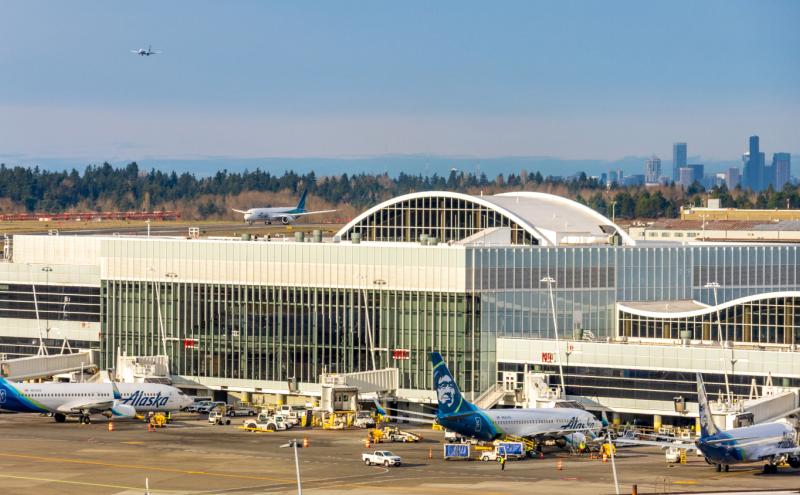
At Seattle-Tacoma International Airport (SEA), the safety and security of our community is our number one priority. This includes our passengers, airport workers, partners, and all those who pass through our doors.
There is increased immigration enforcement activity by federal agencies around the country and locally, including at SEA. The Port of Seattle, which owns and operates the airport, reaffirms its commitment to being a welcoming gateway for people and commerce while acknowledging that travelers with pending immigration applications, affirmative asylum benefit applications, or expired visas may encounter immigration enforcement at our gateways.
The Port of Seattle and SEA airport have no jurisdiction over U.S. Customs and Border Protection (CBP) or U.S. Immigration and Customs Enforcement (ICE) operations. Immigration enforcement actions at SEA are conducted without the Port’s participation or knowledge. For this reason, we encourage individuals to assess their individual circumstances before traveling. For additional transparency, we’ve answered some common questions about immigration enforcement activity at the airport.
Who is at risk?
In recent months, immigration enforcement actions against individuals with pending immigration court cases, pending affirmative asylum benefit applications, or expired visas have increased. If these situations apply to you, or your immigration status is otherwise uncertain, we encourage you to assess your situation before traveling.
How do I prepare for travel if I have uncertain immigration status?
Carry proof of your legal status, including:
- U.S. Citizens: passport
- Lawful Permanent Residents: permanent resident card (“green card”)
- Visa holders: foreign passport, Form I-94 (arrival/departure record), and any other records demonstrating your status.
Before traveling, share your travel itinerary and immigration attorney’s contact information with a family member or friend. Memorize your immigration attorney’s contact information and emergency contact information. If detained, you will lose access to your electronic devices. If you have retained an immigration attorney, carry a physical copy of Form G-28.
Lastly, provide your emergency contacts with contact information for your elected Member of Congress, whom they should notify if you are detained. Use this tool to look up your members of congress.
Can federal immigration agents access SEA?
Yes. SEA is a public-use airport subject to federal regulation. Federal agents have broad access to airport property, including access to the airfield, pre- and post-security areas in the terminal, and public spaces like the parking garage and drives. SEA follows all federal laws and regulations. We expect that all federal officers including CBP and Transportation Security Administration (TSA) will continue to do their best to keep SEA running smoothly and will act with professionalism and respect.
Can the Port limit actions by federal agencies at SEA?
The Port cannot interfere with law enforcement operations by federal agencies, including the Transportation Security Administration (TSA), CBP, ICE, and the Federal Bureau of Investigation (FBI). We also cannot limit access for federal agencies to airport properties, except those restricted to Port employees. Access to areas restricted to Port employees or tenants and their employees requires a judicial warrant or other authority to enter.
Can the Port confirm information about immigration enforcement at SEA?
Federal staff regularly operate at SEA for immigration enforcement of passenger and cargo flights, and only the Department of Homeland Security can confirm cases or incidents. The Port of Seattle is working with our congressional delegation and others in the state of Washington to explore additional actions or steps to improve information-sharing between jurisdictions and safe and secure travel for those who come through our airport.
Does the Port of Seattle Police Department (POSPD) conduct immigration enforcement?
No. POSPD does not conduct, assist, or actively engage in immigration enforcement. POSPD’s focus is on providing a safe and secure environment for the SEA community.
Can the Port stop federal agencies from using SEA for flights and other activities related to immigration enforcement?
SEA is a public-use airport subject to federal regulation, and the Port cannot legally restrict access to SEA for public or private aircraft operations — including aircraft chartered for federal government purposes. However, Port leadership formally asked Washington’s congressional delegation to redouble efforts to explore additional ways SEA can continue to reflect the values of inclusion and dignity.
Can the Port share information about upcoming federal immigration enforcement flights?
SEA Airport does not authorize or disallow these actions. The Port has no jurisdiction over CBP or ICE operations and no control over use of commercial airlines for deportation at our facilities. Historically, the Port of Seattle has not received advance information about immigration enforcement, even when that enforcement takes place on Port property. The Port of Seattle Commission has called upon our federal agencies for greater transparency regarding data-sharing practice that affect all travelers at SEA.
How are visa or green card holders or Lawful Permanent Residents impacted when traveling internationally?
The Port does not have control over operations or entry requirements for arriving international passengers, nor does the Port have any authority over the detention or deportation of arriving international passengers who are deemed inadmissible. The passenger inspection processes for arriving international travelers within the International Arrivals Facility are entirely and exclusively controlled by CBP. Understand your rights and know what to expect before you return to the United States and go through Customs. Review these considerations before traveling internationally.
Additional Information
Questions about immigration enforcement activities or cases should be directed to the appropriate federal agency.
In February 2026, the Port of Seattle Commission adopted two Orders reinforcing policies that develop protocols, protect civil rights, promote transparency, and uphold the values that make our region welcoming and inclusive.
- Order No. 2026-02 (PDF) strengthened transparency and accountability in Port policing by ensuring Port police officers are clearly identifiable from federal agents and they provide advance notice of high-visibility training operations to prevent confusion among the public.
- Order No. 2026-03 (PDF) makes clear that nonpublic Port property will not be used for civil immigration detention or enforcement support, except as required by law.
“Know Your Rights” External Resources
These additional community resources are available for you to learn more:
- Washington State Office of the Attorney General: Know Your Rights: Civil Immigration Enforcement in Washington
- Northwest Immigrant Rights Project: Know Your Rights resources